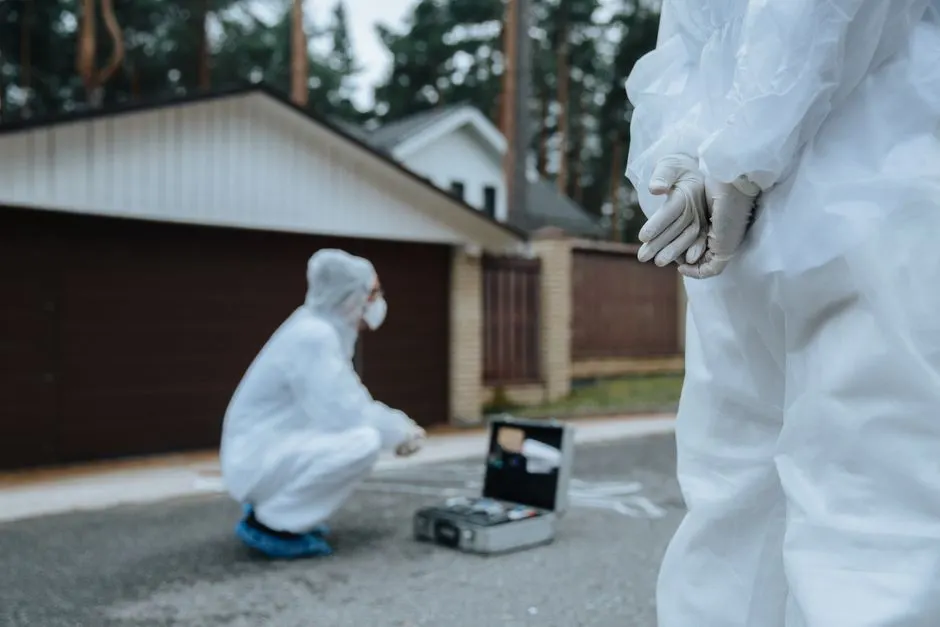
Meter and Usage Check
Bill history and a controlled meter test establish whether a supply leak exists and how strongly the evidence points that way.
Detection covers the diagnostic path from suspected leak to a stated location, with evidence at each step and no repair work bundled in by assumption.
Bill history and a controlled meter test establish whether a supply leak exists and how strongly the evidence points that way.
Lines are isolated in turn so the leaking line type is identified before instruments are used to find its place.
Acoustic listening, thermal imaging and, where suitable, tracer gas are applied as the home and leak type require.
A plain-language summary of the location area, line type and supporting evidence, ready to scope a repair.
Guidance on whether the located leak points toward spot repair, rerouting, repipe or further investigation.
Slab Leak Detection in Annandale is a diagnostic service that locates a leaking water pipe beneath a concrete slab. It does not itself repair the pipe: its value is accuracy. A good detection report states which line is leaking, hot or cold, and the area to open, with the evidence behind that conclusion.
Detection matters most in Annandale because symptoms are ambiguous. A damp floor, a rising bill or a faint sound can come from a slab, basement or crawl-space source, and homes here vary in foundation type. Annandale is a Fairfax County community of 43,363 people in the 2020 Census, in ZIP 22003, where the median home was built in 1968 and 76% of homes were built between 1950 and 1979. That older housing stock matters for under-slab pipework, but it does not mean every home is the same: Annandale foundations vary, with basements, crawl spaces and slabs all present, so the first job is always to confirm which foundation type and pipe route a home actually has before any repair is planned. Slab, basement and crawl-space leaks look different and are fixed differently. A slab leak runs under concrete, so water may show as a warm or damp floor patch, a sound under the floor, or a rising water bill with no visible leak. A basement leak is usually visible at a wall or floor joint and can be inspected directly. A crawl-space leak may show as damp soil, musty air or water under the house. Confirming the foundation type first avoids cutting concrete for a leak that is actually elsewhere.
Detection follows an order: prove a leak exists, narrow the line, then narrow the place, using a different method to confirm each step.
Schedule
Call or book online — a real human picks up and confirms a 2-hour arrival window.
Diagnose
Licensed tech inspects on-site, then walks you through the cause and your options.
Fix
The job is completed to code and done right the first time — no shortcuts, no surprises.
Guarantee
Every job backed by a written workmanship warranty — and we stand behind it.
Acoustic listening equipment
Detects the sound of pressurised water escaping, mapped across the floor to find the loudest point.
Thermal imaging camera
Reveals warm floor patterns from hot-water leaks, useful where sound alone is unclear.
Pressure test gauge
Shows whether an isolated line holds pressure, proving a leak on that line.
Tracer gas kit
Uses a safe gas in a drained line, detected where it escapes, for leaks masked to listening.
Water meter and isolation valves
The first diagnostic tools: they prove loss and separate hot, cold and whole-house lines.
Acoustic detection
Best for pressurised leaks with a clear sound path. Results can be masked by noise, flooring or multiple fittings, so it is cross-checked.
Thermal imaging
Best for hot-water lines, where escaping hot water warms the floor above the leak. Cold leaks show little thermal contrast.
Pressure and isolation testing
Proves which line leaks by watching pressure fall on one isolated run while others hold. It locates the line, not the exact point.
Tracer gas detection
Useful where acoustic results are weak. Gas escapes at the leak and is sensed at the surface, narrowing the area.
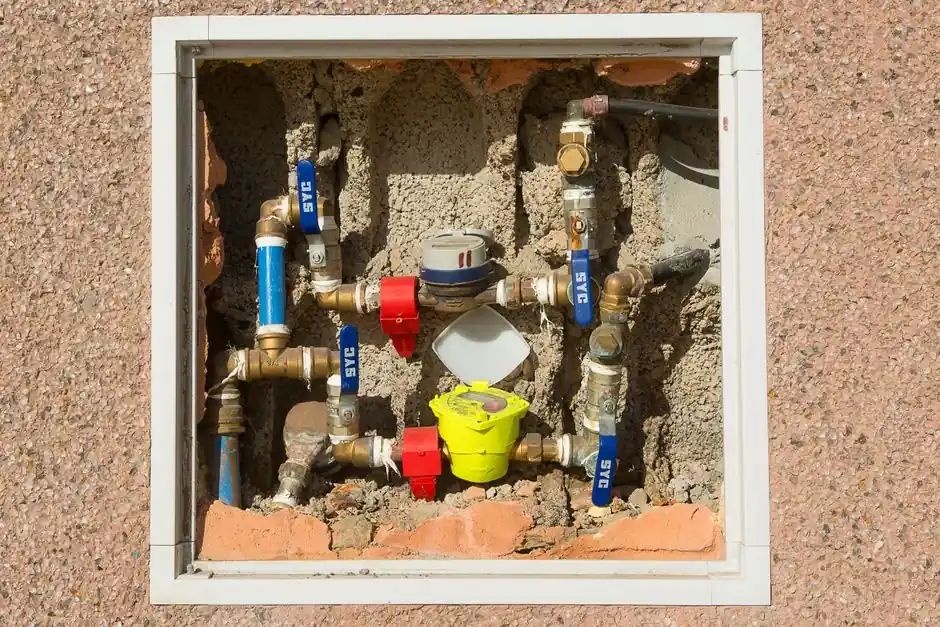
Meter testing
The homeowner-accessible first step: a moving meter with taps off points to a supply leak needing professional location.
01
What we do: Detection proves the line, then locates the leak area, giving a repair scope instead of a guess.
→ Repair can be priced and planned around one location, and the meter recheck confirms success.
02
What we do: Independent detection re-tests isolation and location with its own instrument evidence.
→ The homeowner proceeds, or revises the plan, on confirmed evidence rather than on one report alone.
03
What we do: Hot-line isolation plus thermal imaging maps the warm run and narrows the leak area.
→ Any later hot-water repair is targeted to the mapped section.
Slab Leak Detection in Annandale must adapt to older pipework, varied foundations and different flooring types, because each changes how a signal reads. Annandale is a Fairfax County community of 43,363 people in the 2020 Census, in ZIP 22003, where the median home was built in 1968 and 76% of homes were built between 1950 and 1979. That older housing stock matters for under-slab pipework, but it does not mean every home is the same: Annandale foundations vary, with basements, crawl spaces and slabs all present, so the first job is always to confirm which foundation type and pipe route a home actually has before any repair is planned. Slab, basement and crawl-space leaks look different and are fixed differently. A slab leak runs under concrete, so water may show as a warm or damp floor patch, a sound under the floor, or a rising water bill with no visible leak. A basement leak is usually visible at a wall or floor joint and can be inspected directly. A crawl-space leak may show as damp soil, musty air or water under the house. Confirming the foundation type first avoids cutting concrete for a leak that is actually elsewhere. Fairfax Water is the public water supplier for Annandale. Its Courtesy Leak Adjustment is not a promised discount: eligibility generally requires prompt repair with receipt or invoice proof and no adjustment in the preceding 5 years, so homeowners should check current eligibility rules and keep their repair paperwork. Problem soils described as marine clay are reported as widespread east of I-95; that is not a blanket claim about Annandale, so soil conditions should be checked on the county soil map for the specific street.
Broyhill Crest
Older pipe runs mean isolation testing is done carefully, run by run, before an acoustic search begins.
Wakefield Forest
Mixed foundations require the triage step first, so a basement source is not misread as a slab leak.
Canterbury Woods
Flooring type is noted, since tile, wood and carpet transmit sound and heat differently.
Sleepy Hollow
Per-street soil context is checked on the county map rather than assumed for the whole neighbourhood.
Ravensworth
Repeat-symptom homes get a full-system isolation check, not only a search at the last leak site.
Homes built mainly 1950-1979
Older, possibly corroded pipework can produce weaker or more diffuse acoustic signals, so cross-checking matters.
Mixed foundation types
Detection must first rule out basement and crawl-space sources, or a slab location will be wrong.
Fairfax Water meter evidence
Bill and meter history give a useful baseline for how much water is being lost and how urgently to act.
Without detection, a slab leak is a symptom with no address, and repair becomes a search rather than a fix.
Problem
Water can be lost under concrete for weeks while every visible tap and fixture looks dry.
Our Fix
Meter and isolation testing prove a supply loss, and instrument detection then gives that loss a location to repair.
Problem
Moisture under flooring can come from a slab leak, a basement seep or condensation, each needing different work.
Our Fix
Foundation triage plus detection methods separate those causes, so the right repair, not just any repair, is planned.
Problem
Homeowners delay help when they imagine whole floors being lifted to find one leak.
Our Fix
A pinpointed location limits the planned opening to the fault area, making the repair scope knowable in advance.

Detection separates a proven leak location from a symptom, and that separation is what keeps later repair work small and honest.
One Opening, Not Several
A pinpointed location means repair can be planned around one area. Without it, a technician may need to open floor in several places before finding the fault.
Hot Versus Cold Certainty
Isolation testing shows whether the hot line, cold line or whole system is losing water. That distinction changes both the repair method and the area to investigate.
Evidence for the Next Decision
Meter readings, pressure results and instrument findings together form a record. Homeowners can use it to compare repair options and, if needed, a second opinion.
Fewer False Alarms
Condensation, a dripping fixture or a basement seep can mimic a slab leak. Cross-checked detection avoids repairing a slab for a leak that is not there.
Final cost depends on the job, not on a standard Annandale price, so no price is quoted here. The factors below are what change the scope, and a written scope for the specific leak is the only sound basis for a figure.
What changes the price
Number of methods needed
A leak found by one method costs less diagnostic time than one needing acoustic, thermal and tracer checks together.
Home size and pipe layout
Longer runs and more branches take longer to isolate and search, increasing diagnostic time.
Flooring and access
Thick flooring, built-in fittings and limited access can slow listening and imaging work.
Leak size and sound
A strong, clear leak is faster to locate than a slow seep whose signal is faint or masked.
Repeat or inconclusive findings
If first results conflict, further testing is needed before a location can be stated responsibly.
Slab Leak Detection in Annandale depends on interpretation, not on owning one instrument. Acoustic signals travel through concrete and fittings, thermal patterns shift with flooring and heating, and pressure drops have several causes. Reading those signals together, and knowing when a result is inconclusive, is the expertise.
Real answers to the questions we hear most often from local homeowners and property managers.
The core repair service for a confirmed under-slab leak, covering the repair itself after detection has pinpointed the fault.
View Slab Leak RepairUrgent response for active, spreading or high-volume leaks, starting with shut-off and damage control in the first minutes.
View Emergency Slab Leak RepairRepair focused on leaks in hot-water lines, where warm floors and rising hot-water use are the usual clues.
View Hot Water Slab Leak RepairRepair of supply-water lines under the slab, the pressurised lines that feed taps, showers and appliances.
View Water Line Slab Leak RepairDirect-access repair beneath the slab itself, including careful concrete opening, pipe repair and reinstatement.
View Under Slab Leak RepairA bypass method that abandons a failed under-slab section and runs a new line by a different route.
View Slab Leak Pipe ReroutingCall (703) 555-0100 to book slab leak detection or repair in Annandale, Virginia. Tell us the symptoms, your foundation type if you know it, and the result of a meter test if you have run one, and we will plan the visit around detection first.
Phone
(703) 555-0100Address
7456 Valleycrest Blvd, Annandale, VA 22003, Annandale, Virginia
Hours
Mon–Fri: 7AM – 7PM
Sat: 8AM – 4PM
Sun: Emergency Only
24/7 Emergency Available