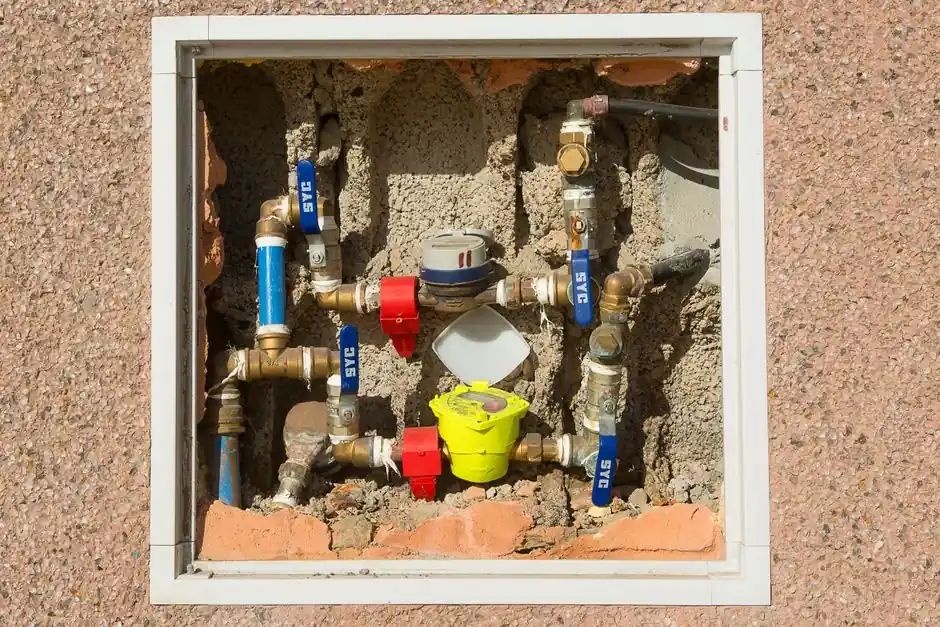
Symptom and Meter Assessment
A structured check of bills, floor symptoms, sounds and meter movement, with isolation testing to separate hot, cold and whole-house leaks.
The service covers the full path from confirmed symptom to tested repair, with each stage explained so the homeowner knows what has been proven and what remains.
A structured check of bills, floor symptoms, sounds and meter movement, with isolation testing to separate hot, cold and whole-house leaks.
Acoustic, thermal and, where suitable, tracer-gas methods used together to narrow the leak location before any concrete work.
A plain-language comparison of spot repair, rerouting and repipe for the specific fault, including disruption and future-risk trade-offs.
The agreed repair, followed by pressure testing and a meter recheck to confirm the line holds before the job is considered complete.
Clear information on how the opening is reinstated, what curing and drying to expect, and what flooring work, if any, remains separate.
Slab Leak Repair in Annandale is a specialist plumbing service that repairs a leaking water pipe beneath a concrete floor slab. The work begins with detection and isolation testing, moves to a chosen repair method, and ends with pressure testing and a check that the symptoms, such as damp flooring or a spinning water meter, have stopped.
Annandale homes built mainly between 1950 and 1979 often have older copper or galvanised pipework under the slab, and repeated heating, soil movement and water chemistry can wear joints and thin pipe walls over time. A repair plan should therefore compare spot repair, rerouting and full repipe honestly: spot repair suits a single accessible fault, rerouting suits a failed section, and repipe suits repeated failures. Annandale is a Fairfax County community of 43,363 people in the 2020 Census, in ZIP 22003, where the median home was built in 1968 and 76% of homes were built between 1950 and 1979. That older housing stock matters for under-slab pipework, but it does not mean every home is the same: Annandale foundations vary, with basements, crawl spaces and slabs all present, so the first job is always to confirm which foundation type and pipe route a home actually has before any repair is planned.
Five stages take a suspected leak from first signs to a tested repair, with decisions explained before concrete is cut.
Schedule
Call or book online — a real human picks up and confirms a 2-hour arrival window.
Diagnose
Licensed tech inspects on-site, then walks you through the cause and your options.
Fix
The job is completed to code and done right the first time — no shortcuts, no surprises.
Guarantee
Every job backed by a written workmanship warranty — and we stand behind it.
Acoustic leak listening equipment
Amplifies the sound of escaping water through concrete so the leak area can be narrowed before cutting.
Thermal imaging camera
Shows temperature differences in the floor, which is especially useful for hot-water line leaks.
Pressure testing gauge
Measures whether an isolated line holds pressure, confirming a leak and later confirming a repair.
Tracer gas detection kit
Introduces a safe tracer gas into a drained line and detects where it escapes at the surface.
Concrete cutting and reinstatement tools
Opens the slab in a controlled area and reinstates it after the pipe repair is complete.
Spot repair
The failed section is exposed and replaced at the leak point. It suits a single fault in pipe that is otherwise in reasonable condition.
Pipe rerouting
A new pipe run bypasses the failed under-slab section, which is abandoned in place. It suits a weak section or poor access.
Whole-system repipe
Failed pipework is replaced across the system, usually above slab or through walls. It is discussed when leaks keep returning.
Direct-access under-slab repair
Repair is made through a slab opening directly above the fault, with reinstatement planned as part of the same job.
01
What we do: Meter testing with all taps off, followed by isolation and detection, determines whether the loss is under the slab and where it sits.
→ The leak is found and repaired at one location, and the meter check afterwards confirms the loss has stopped.
02
What we do: Hot-line isolation and thermal imaging narrow the warm area to a pipe run, and a repair method is chosen for that section.
→ The hot line is repaired or bypassed, and the floor can begin drying with the water source removed.
03
What we do: Foundation type is confirmed first, then detection and repair are carried out for the under-slab line if that is the proven source.
→ Further moisture damage is halted, and flooring work can be planned on a dry, repaired base.
Slab Leak Repair in Annandale must start from the home in front of the technician, not from a generic slab-leak template. Annandale is a Fairfax County community of 43,363 people in the 2020 Census, in ZIP 22003, where the median home was built in 1968 and 76% of homes were built between 1950 and 1979. That older housing stock matters for under-slab pipework, but it does not mean every home is the same: Annandale foundations vary, with basements, crawl spaces and slabs all present, so the first job is always to confirm which foundation type and pipe route a home actually has before any repair is planned. Slab, basement and crawl-space leaks look different and are fixed differently. A slab leak runs under concrete, so water may show as a warm or damp floor patch, a sound under the floor, or a rising water bill with no visible leak. A basement leak is usually visible at a wall or floor joint and can be inspected directly. A crawl-space leak may show as damp soil, musty air or water under the house. Confirming the foundation type first avoids cutting concrete for a leak that is actually elsewhere. Fairfax Water is the public water supplier for Annandale. Its Courtesy Leak Adjustment is not a promised discount: eligibility generally requires prompt repair with receipt or invoice proof and no adjustment in the preceding 5 years, so homeowners should check current eligibility rules and keep their repair paperwork. Problem soils described as marine clay are reported as widespread east of I-95; that is not a blanket claim about Annandale, so soil conditions should be checked on the county soil map for the specific street.
Broyhill Crest
Older housing stock calls for a check of pipe age and previous repairs before a single-spot fix is assumed sufficient.
Wakefield Forest
Varied foundations mean the slab-versus-basement-versus-crawl triage is essential before concrete work is planned.
Canterbury Woods
Floor symptoms are cross-checked with meter evidence, since damp patches can have more than one local cause.
Sleepy Hollow
Soil and drainage context is noted per street, using the county soil map rather than a blanket soil claim.
Ravensworth
Repeated-leak history, where present, pushes the discussion from spot repair toward rerouting or repipe.
Homes built mainly 1950-1979
Older pipework is more likely to show corrosion and joint wear, so pipe condition across a run matters, not just the single leak point.
Mixed foundation types
A symptom that looks like a slab leak in one home may be a basement or crawl-space leak in another, so foundation confirmation comes first.
Fairfax Water supply and billing
Meter evidence and bill history are useful diagnostic clues, and repair paperwork matters for any leak-adjustment eligibility check.
A leak under concrete creates problems that are easy to miss early and expensive to ignore, from wasted water to damaged flooring.
Problem
A hidden supply leak can waste water continuously, raising Fairfax Water bills month after month while no tap appears to drip.
Our Fix
Meter and isolation testing confirms whether a supply leak exists, detection finds it, and repair stops the continuous loss at its source.
Problem
Persistent moisture can lift flooring, stain finishes and create conditions for mould growth beneath floor coverings.
Our Fix
Locating the leak and repairing the pipe removes the water source, after which drying and flooring assessment can proceed honestly.
Problem
A faint hiss or flow sound with taps off often means pressurised water is escaping where it cannot be seen.
Our Fix
Acoustic detection traces that sound to a location, and the repair is then made at the fault rather than across a wide floor area.
Problem
Fixing one pinhole while neighbouring pipe is equally corroded can lead to a second leak soon after the first repair.
Our Fix
Pipe condition is assessed across the run, and rerouting or repipe is discussed when spot repair alone would leave a failing system in place.

A repair that starts from a located leak, rather than from a symptom alone, keeps the work smaller, clearer and easier to check afterwards.
Less Exploratory Concrete Cutting
Pinpointing the leak before cutting means the opening is made where the fault actually is. That reduces floor damage, dust and reinstatement work, and it avoids opening several areas in search of one leak.
A Repair Matched to the Fault
A single pinhole, a corroded section and a repeatedly failing line are different problems. Matching the method to the fault avoids both under-repairing a weak line and replacing pipework that still has sound life in it.
Verifiable Results After Repair
Pressure testing and a meter check after the repair show whether the line now holds. Homeowners can see the before-and-after evidence instead of relying only on the absence of a damp patch.
Protection for Floors and Foundations
Water under a slab can lift flooring, feed mould growth and, over time, disturb soil support. Stopping the leak promptly limits that chain of damage and the secondary work it creates.
Final cost depends on the job, not on a standard Annandale price, so no price is quoted here. The factors below are what change the scope, and a written scope for the specific leak is the only sound basis for a figure.
What changes the price
Leak location and depth
A shallow, accessible leak needs less opening work than a deep or awkwardly placed fault under a finished floor.
Repair method chosen
Spot repair, rerouting and repipe differ in pipe length, labour and reinstatement, so method choice is a major cost driver.
Concrete and flooring work
Cutting, reinstatement and any flooring restoration add scope beyond the pipe repair itself.
Detection difficulty
A leak that needs several detection methods, or that sits near other services, takes longer to pinpoint safely.
Extent of water damage
Drying, flooring and secondary repairs increase the overall job, which is why early location matters.
Slab Leak Repair in Annandale calls for a different skill set from general plumbing: reading meter and pressure evidence, interpreting acoustic and thermal signals through concrete, and choosing between repair methods without overstating any one of them. Local knowledge matters too, because Annandale housing age and foundation variety change what a symptom means from one street to the next.
Real answers to the questions we hear most often from local homeowners and property managers.
Pinpointing-only work that finds the leak location before any concrete is cut, so repair work is targeted rather than exploratory.
View Slab Leak DetectionUrgent response for active, spreading or high-volume leaks, starting with shut-off and damage control in the first minutes.
View Emergency Slab Leak RepairRepair focused on leaks in hot-water lines, where warm floors and rising hot-water use are the usual clues.
View Hot Water Slab Leak RepairRepair of supply-water lines under the slab, the pressurised lines that feed taps, showers and appliances.
View Water Line Slab Leak RepairDirect-access repair beneath the slab itself, including careful concrete opening, pipe repair and reinstatement.
View Under Slab Leak RepairA bypass method that abandons a failed under-slab section and runs a new line by a different route.
View Slab Leak Pipe ReroutingCall (703) 555-0100 to book slab leak detection or repair in Annandale, Virginia. Tell us the symptoms, your foundation type if you know it, and the result of a meter test if you have run one, and we will plan the visit around detection first.
Phone
(703) 555-0100Address
7456 Valleycrest Blvd, Annandale, VA 22003, Annandale, Virginia
Hours
Mon–Fri: 7AM – 7PM
Sat: 8AM – 4PM
Sun: Emergency Only
24/7 Emergency Available